The Storyteller's Lens

For the scenes that linger and the words that echo

  • Pallu Equals Love’ to ‘Bad English Equals Charm’: Karan Johar Finally Grew Up

    It took 25 years, a blue bra, and Ranveer Singh’s English — but he finally got there.

    In 1998, Kuch Kuch Hota Hai released to screaming crowds and all-time blockbuster labels. Everyone loved it — except me. I walked out of the theatre midway (a first for me, and I’ve sat through some truly questionable cinema). Something about it made me bristle like a porcupine rubbed the wrong way. The syrupy moral binaries, the forced “values,” the way love suddenly arrived wrapped in a chiffon saree — no, thank you. I decided then that I wasn’t spending another paisa watching Karan Johar’s films in a theatre.

    But curiosity is a stubborn thing. So when his later films came on TV — Kabhi Khushi Kabhie Gham, Kal Ho Naa Ho, Kabhi Alvida Naa Kehna, My Name Is Khan, Student of the Year — I watched them all. And what struck me, over time, was not the gloss or grandeur (that was a given) but the gradual shift in his storytelling. Karan Johar was changing — slowly, deliberately, one film at a time.

    The Evolution of Love: From Worship to Work

    Johar’s directorial arc has always revolved around love — one-sided love, tragic love, friendship-turned-love, forbidden love, even extra-marital love (KANK deserves its own essay for the sheer audacity of that happy ending). But what fascinates me is how he’s gone from defining love as a spectacle to portraying it as an effort — from something you fall into to something you build together.

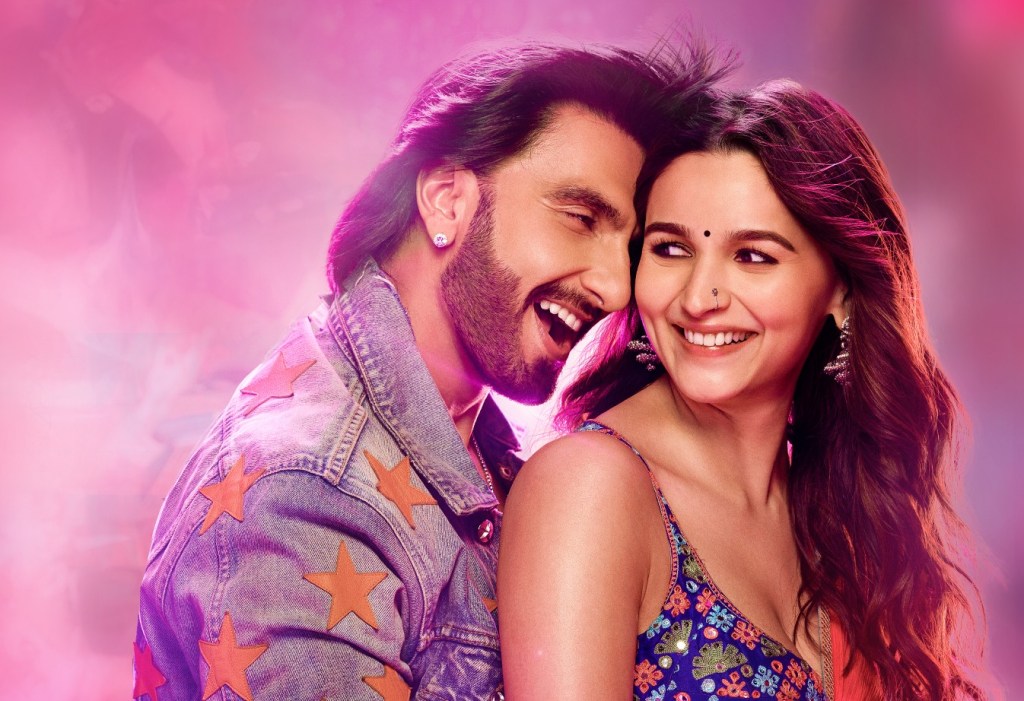
    When he made Rocky Aur Rani Ki Prem Kahani, it felt like he’d finally exhaled. Like he was done trying to put his leads into pre-moulded archetypes. The film felt like a quiet rebellion against the Karan Johar of 1998.

    From Anjali and Tina to Rani and Gayatri

    KKHH gave us Anjali and Tina. Rocky Rani gives us Rani and Gayatri. The contrasts are delicious.

    • Anjali believed love happens only once. Rani laughs at that idea — “It’s just a fling, just a thing,” she says, until her heart refuses to play along.
    • Anjali called love a compromise. Rani says, “We love each other, so we adjust, we compromise — that’s what love is.”
    • Tina sang a bhajan to prove she had sanskaar. Gayatri, overweight and anxious, sings Gupchup Gupchup — an item number — to assert her right to exist as she is. Terrified inside, defiant outside.

    Even the side arcs matured. KKHH used Miss Braganza’s comic flirtations for laughs; RRPK used the grandparents’ incomplete love for gravity and grace — the kind that carries generational echoes. The film’s use of Abhi Na Jao Chhod Kar makes that love story quietly unforgettable — not nostalgic, but healing.

    The Gaze Has Shifted — And So Has the Wardrobe

    In KKHH, Rahul noticed Anjali only after her “transformation”: the sari, the straight hair, the breeze doing its filmi duty. His love arrived when she looked the part.

    In RRPK, Rani Mukerji’s chiffon saris — the very trope I once despised — return, but they’re reframed. Rani’s sensuality is hers, not a costume for approval. More importantly, Rocky — a man from a deeply traditional Punjabi family where women wear loose salwars and pull ghoonghats over their heads — never once imagines Rani in “modest” attire. The thought doesn’t even cross his mind.

    He loves her exactly as she is — bold, sharp-tongued, luminous — and she loves him in return, not despite his bad English but because of his soft heart and unfiltered honesty. His lines might make you cringe — but that’s precisely the point. His emotional fluency transcends language.

    The Duet Reversed

    Even the love song plays differently now. In Tum Kya Mile, the usual gender roles are flipped.

    It isn’t the hero brooding over lost love; it’s the heroine — the tough, practical, self-contained Rani — who finds herself blindsided by emotion. She’s the one imagining him everywhere while trying to focus on work.

    For a director who once romanticized male yearning and female transformation, this reversal feels poetic.

    When the Roles Reverse

    There’s another subtle revolution in RRPK: the emotional flip of gender archetypes.
    Rani is the practical, brash, short-tempered one. Rocky is the emotional, romantic, soft-hearted soul. Together, they stumble, argue, and struggle to find middle ground — and we see that struggle. Love isn’t a montage anymore; it’s a negotiation.

    A Full-Circle Moment

    And what do you know? The movie is a hit. One of the year’s highest grossers. But for me, it’s more than box office validation — it’s narrative redemption.

    The filmmaker who once made a heroine change herself to earn love now gives us women who change nothing and still get it. The man who once made “pallu equals love” now says “bad English equals charm.”

    So yes, Karan Johar — take this pat on the back. I have officially, completely forgiven you for Kuch Kuch Hota Hai.

    Go ahead and give us more Ranis and Gayatris.
    I’ll watch them all — this time, in the theatre.
  • OG – When Craft Becomes the Story

    Where silence speaks, the camera thinks, and the craft outruns the cliche.

    Another movie that made me pause. Not because the story was unique or the dialogues were out of this world. But because it changed something fundamental — the way a story is told.

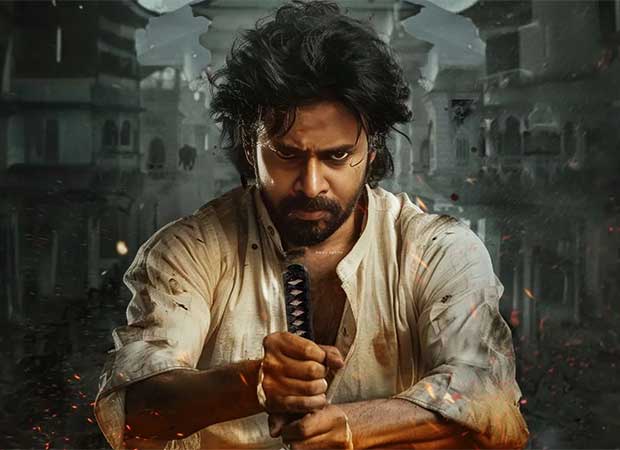
    At the heart of it, OG is a regular Telugu masala movie. The kind we’ve seen a hundred times over. The hero is your classic mass archetype — a silent storm in leather boots, wielding a Samurai sword this time (we’ve clearly upgraded from the axe/hammer/machine-gun inventory), slicing heads like they’re overripe watermelons and papayas.

    The background score knows exactly when to rise.
    The camera knows exactly when to slow-mo.
    And yet… something feels different.

    Because this time, the craft outruns the cliché.

    The family setup? Predictable.
    Grumpy-sunshine equation, daughter added for emotional stakes.

    The backstory? Textbook.
    Loner, birth parents dead, finds father figure in Satya Dada, dedicates life to protecting the man and his empire.

    The villain? Omi — Omkar Vardhaman Mirajkar — a name that sounds like a thesis on chaos. His geography makes zero sense. The man travels from Mumbai port to Nashik, kills a few people, and gets back to the port before Satya Dada (who is still in Nashik) finishes one phone call.

    But compared to Ram Charan’s Vinaya Vidheya Rama, where the man jumps from a Gujarat airport to Bihar to some Himalayan horse track in one exhale — this one actually makes you think,
    “Yes, yes. Possible. Totally doable.”

    Because the difference lies not in what is told, but how it’s told.

    No loud dialogues.
    No cringe punchlines pretending to be machismo.
    No disco-ball costumes masquerading as style.

    Even the cars, the houses, the streets — they breathe Bombay of the 80s and 90s.
    The production design feels lived-in, not dressed-up.
    The cinematography doesn’t worship the hero; it observes him.

    A refreshing shift.

    What struck me most was the narrative rhythm.
    The film moves between past and present — and sometimes a different past before swinging back to a different present — all seamlessly.
    There’s no spoon-feeding. No explanatory dialogues. No “Do you know who he is?” nonsense.

    You understand who OG is through visual language —
    through stillness, silence, and what the camera chooses to reveal.

    Pawan Kalyan says very little throughout.
    His stillness is storytelling.
    His silence carries weight.
    When he does speak, it’s stripped of Instagram-reel theatrics.

    And then there’s Arjun’s voiceover.
    That voice.
    That gravel.
    That command.

    “When cyclone strikes, you bow to the tide. When OG comes, you run and hide.”

    Poetic. Menacing. Dignified.
    I only wish he’d delivered the entire line instead of splitting it with Prakash Raj.

    Still, it lingers.

    OG is proof of how far a familiar story can go when you respect screenplay, narration, and editing as much as you worship your star.

    Sujeeth clearly had a vision in Saaho: a sprawling world, slick tone, ambition.
    The problem was the execution.
    It felt like a concept trapped inside a spectacle.

    But with OG, he gets it right.

    The restraint.
    The world-building.
    The atmosphere.
    The tone.

    Every frame feels like part of a larger cinematic universe — one that doesn’t rely on punchlines or VFX fireworks, but on mood and menace.

    And that’s where Sujeeth wins.
    Because when you can take a story this familiar and make it feel fresh… when you can make your audience care even when they already know what’s coming… that is the hallmark of a director with vision.

    Now that OG and Saaho officially exist in the same universe, I can’t wait to see what he’s building next.

    Because if this is the prologue…the storm hasn’t even begun.

  • Varanasi and the Vanishing Storyteller

    A title reveal that showed us everything — except the filmmaker we once knew.

    The title-reveal event of SS Rajamouli’s Varanasi was nothing short of a spectacle—lights, choreography, music, crowds, scale. A full-blown show for a title reveal.
    Not a trailer.
    Not a thematic teaser.
    Just a carefully controlled glimpse of Mahesh Babu and a soundtrack engineered to stir excitement.

    And yet, amid all that grandeur, one simple question kept circling in my mind:

    Why?
    What purpose did this serve?

    They spoke of “celebrating cinema” and “pushing boundaries,” but shared nothing meaningful about the film itself.
    A whisper about Prithviraj possibly playing the antagonist.
    A faint suggestion of time travel.
    The name Varanasi echoing across the stage.

    And so much noise.

    And somewhere in that noise, I found myself thinking of a different Rajamouli.

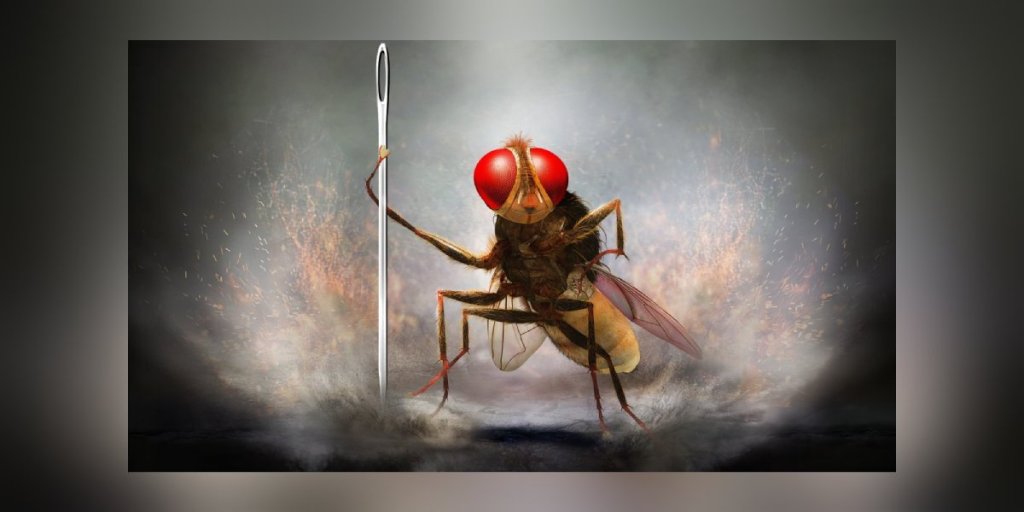
    The Rajamouli who let a housefly carry a story.
    Who stitched reincarnation and revenge into magic.
    Who wrote women who were fierce, central, unforgettable.
    Who didn’t need a stage show to move an audience—he needed only a story.

    That Rajamouli’s spectacle had soul.
    The scale came after the story, not instead of it.

    With Baahubali: The Conclusion, I already sensed a shift—a filmmaker responding to the mythos of his own success. What felt organic in part one became magnified in part two, and the emotional thread frayed at the seams. The ending felt rushed, uneven, almost burdened by expectation.

    RRR had a strong central idea—fire and water—but even there, the balancing act for its two stars was unmistakable. Equal glory, equal pain, equal heroics. And somewhere in that perfect symmetry, the women faded into near-invisibility.

    Which brings me back to Varanasi.

    Why this extravagant title reveal?
    Why orchestrate a massive event when not a single piece of the film’s soul was allowed to surface?
    Was this truly a celebration of cinema…
    or a meticulously crafted exercise in hype?
    A push to ride Mahesh Babu’s star power rather than reveal the filmmaker’s vision?

    The crowd roared. Passes were scanned. Excitement peaked.
    But once the lights dimmed and the applause dissolved, I was left with an unsettling sense that the storyteller was missing.

    That beneath the fireworks and fog machines, the Rajamouli who once trusted narrative more than noise had been overshadowed by the Rajamouli forced to outdo the legend of his own name.

    Maybe that’s what happens when a filmmaker becomes a phenomenon.
    Or maybe…I’m simply searching for the man who once made me believe that a fly could carry a film.