A man built, not born. And a performance that never breaks.
First and foremost… Ranveer Singh is something else.
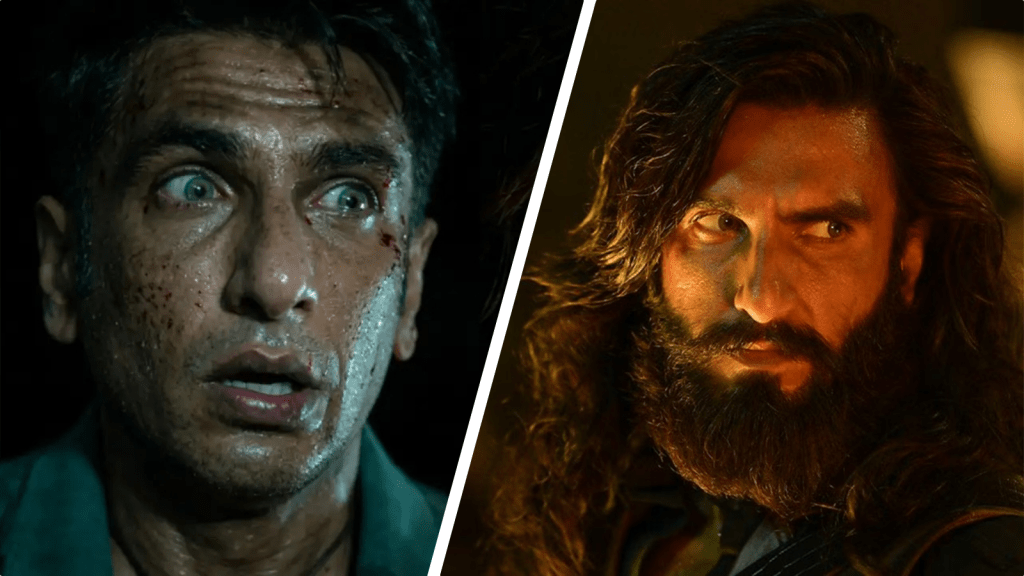
He has gone beyond being an actor in this movie. He is a chameleon.
The first half hour shows him as Jaskirat in the year 2000 and there is absolutely no trace of Hamza there. It’s like he is another person. The military haircut explains the face looking different. But the rest…he changed everything – his modulation, his eyes, the way he walks, talks, stands…
Who the hell changes the way a person stands, for God’s sake?
And right after the flashback comes a scene with Aalam. There you see glimpses of both Jaskirat and Hamza. Not sure how he pulled that off, but I genuinely saw both shades. After that, except for the interval, it’s all Hamza through and through. Even during the fights, even during the chaos…he remains Hamza. And then, in the final scene…he becomes Jaskirat again.
I genuinely didn’t see Hamza in that moment.
Also, truly appreciate the fact that he didn’t go for the usual physical transformation route. No extreme bulking or toning like what we saw with Rana Daggubati and Prabhas in Baahubali. His face was made to look broader with the beard and that ridiculous amount of hair (which, honestly, women would kill for), and his body was made to look bulkier through costume design. Strip that away, and you see a lanky frame with slightly hollow cheeks.
Interesting that through the whole movie, they never let the dignity of a woman fall. Any woman.
Even during the flashback, things were said. Never shown. For a director who didn’t hesitate to show a head being bashed in or blown off, this wouldn’t have been a stretch. But no. That’s a line Dhar chose not to cross.
And that restraint shows.
Hamza taking over Lyari was shown almost in fast-forward mode. The film clearly chooses momentum over depth here. The gang wars, Uzair’s role, Hamza’s planning. Everything moves at a sharp pace. It works for the narrative, but you do feel the compression. But what lands beautifully is why Hamza stays close to Uzair and not Rehman.
“Bhai hai tu mera.”
That’s the line. That’s the emotion. That’s the hook. Uzair trusts that emotion. And that trust is exactly what Hamza builds and uses.
Another thing the film gets absolutely right is it never turns Hamza into a one-man army. This entire mission is not built as a solo act. And that’s what makes it believable. There’s Rizwan. There’s Aalam. There’s the Baloch army and their head. There are people working on the ground in India.
Hamza is at the center of it, yes. He is the mind, the strategist, the one pulling the strings on the Pakistan side. He is part of the action when needed.
But he is never alone.
Execution is always a team effort.
And on the other side, Sanyal and Bansal mirror that with their own planning and people. It’s not hero vs system.
It’s system vs system.
And that balance is what keeps the film grounded. Even in the end, when Hamza hands over the book to Rizwan with a quiet Jai Hind, it doesn’t feel like a climax. It feels like a handover.
Like the mission was never his alone to begin with.
Another thing the film gets right is it doesn’t pretend Jaskirat was born this way. Hamza is made.
And not just through physical training. We see the psychological conditioning. The medical awareness. The way information is layered into him methodically, deliberately. He doesn’t walk into Lyari as a know-it-all. He walks in prepared.
He doesn’t befriend Uzair because he’s instinctively sharp. He does it because he’s been taught where to look at emotional weak links, at personal equations, at the spaces people don’t guard.
He knows Rehman not because he has figured him out on the fly, but because he has been fed everything how Rehman became who he is, what feeds his ego, what triggers it.
Even the violence is not random. Every move feels chosen. Because not every opponent needs the same weapon.
That’s the difference between a man who fights…and a man who is built for it.
And then comes the most surprising choice of all – zero romance.
We see Yalina. We see her pregnancy. We see their son. All of it plays out in a song, intercut with Hamza’s rise as Lyari ka Baadshah.
And yet…you never miss the romance. Not once do you wonder if something is lacking.
Because the bond is there. Just not in your face.
It’s in:
- her subtle nudge in the crowd
- her quiet caution – Hamza, careful, there’s our kid at home
- his softened stance in front of her
- that hard, scanning gaze that softens for just a fraction of a second when it lands on her
- Their confrontation where he bows to her but refuses to surrender and she quietly says – you need to move quickly.
That shift…that one fleeting moment…That’s where the romance lives.
And that’s where Ranveer Singh goes to another level.
As for the plot…keeping the slightly rushed gang war aside, it all comes together extremely well. The surgical strike is mentioned but not dramatized. And honestly, that choice makes sense since we already have an entire film dedicated to that event. Here, it’s just a moment. A reaction.
And what a reaction. A brief flash of surprise…followed by satisfaction.
And then comes the unraveling. One small detail. One shift. That’s all it takes.
That’s the one moment where Jaskirat breaks through Hamza…when he opens the door for Aalam and tries to explain. And Aalam, with his rapid reasoning, forces him right back into character.
Behind all of this are the two men who created Hamza – Sanyal and Bansal.
R. Madhavan…take a bow.
From “abba nahi maanenge” in 3 Idiots to “tera baap bhi maanega” here…you’ve come a long way.
With the makeup, he looks less like himself and more like Ajit Doval. But it’s the performance that lands. The smug satisfaction, the pride in “mere babbar sher,” the absolute certainty when he says Hamza won’t crack. And that push when he meets Hamza – don’t hold back. Unleashing Hamza.
And then…Jameel Jamali.
Rakesh Bedi absolutely owns every scene.
That forced laugh. That fake sympathy. That constant “mera bachha” You know it’s fake. The person hearing it knows it’s fake. And yet…it works. Every single time.
That small correction “mera bachha…mera damaad hai” had me laughing, but also thinking…Good. Hamza is safe. Because we know what “mera bachha” usually leads to.
Four hours of runtime. Didn’t feel like it. Yes, a few trims could have helped but that’s an observation, not a complaint.
The final reveal? Earned claps. Whistles. The works.
And I know I’ll react the same way when I watch it again.
By the end…you’re not looking for the actor anymore. Because the man he became has already taken his place.
The Storyteller's Lens
For the scenes that linger and the words that echo
-
-
From romance to restraint — my changing equation with Shah Rukh Khan
I don’t enjoy most romances.
They need to have something more…conflict, context, consequence. Love alone, with random drama stitched around it, doesn’t work for me. Maybe that’s why my relationship with Shah Rukh Khan has always been… complicated.
I know what he represents. I know what he means to Hindi cinema. I understand why entire generations grew up believing in love because of him.
But films like Kuch Kuch Hota Hai never worked for me. In fact, I remember my WTF thought in the theatre the moment the “transformation” happened—the long hair, the sarees, the sudden shift into what we were expected to accept as love. It didn’t sit right with me then. It still doesn’t.
Even Dilwale Dulhania Le Jayenge, iconic as it is, felt more constructed than lived-in for me. The emotional choices felt too convenient for something that should have carried more weight.
And yet…
Today, I find myself drawn to Shah Rukh Khan more than ever.
The Shift
Somewhere along the way, both of us changed.
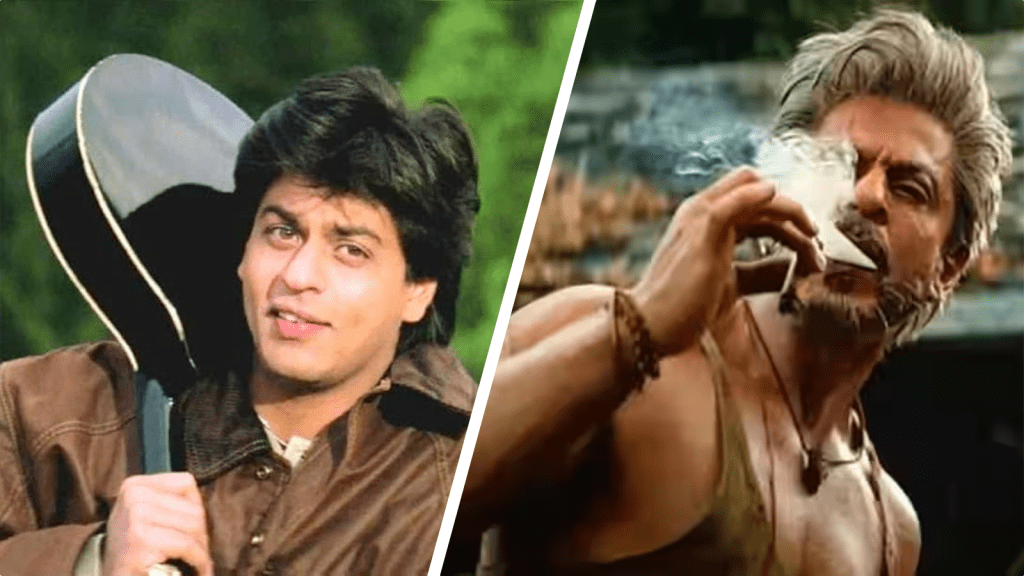
The Shah Rukh Khan of the 90s and early 2000s thrived on emotional openness. His characters loved deeply, expressed freely, and wore their hearts on their sleeves. That was his strength. It was the audience’s connection to him.
But the Shah Rukh Khan of today operates very differently.
He doesn’t offer emotion easily anymore. He contains it.
Whether it’s Swades, Chak De India, or even his more recent commercial outings like Pathaan and Jawan (their plots and storylines notwithstanding), there is a noticeable shift in how he holds himself on screen. The emotion is still there. But it’s measured, controlled, almost withheld.
And strangely, that makes it more powerful.
The Intelligence Behind the Actor
What makes this evolution interesting is that it doesn’t feel accidental.
I see Shah Rukh Khan as an actor who is incredibly intelligent. Someone who understands not just performance, but positioning. He doesn’t take himself too seriously. He can laugh at himself, crack jokes about his own roles, and allow others to do the same without defensiveness. That kind of ease comes from clarity…of who he is and what he brings to the table.
He knows his limitations. And more importantly, he respects them.
He doesn’t venture into spaces where his skill set doesn’t extend. And after all these years, even directors seem to instinctively know what works for him and what doesn’t. Someone like Ashutosh Gowariker would choose him as Mohan in Swades, not Bhuvan in Lagaan. The alignment matters and he has built a career on understanding that alignment.
At the same time, he leans into what he does best.
His vulnerability has always been his strongest asset. He expresses emotion without hesitation or guardedness. Audiences respond to that instinctively. Even in areas where he isn’t naturally built for, like action, he adapts. He often adds a touch of humor, a certain lightness, which makes the performance feel more believable rather than forced.
And then there is something else. Something that often goes unspoken. A certain… chivalry.
I’ve rarely seen him disrespect women in his films, even in moments written for comedy. There is a consistent sense of care in how he engages with his female co-stars both on and off screen. He is measured in what he says, how he says it, and how he positions the women around him.
And that shows.
Chemistry, Not Repetition
One of the most fascinating aspects of his performances is how he recalibrates himself depending on who he is paired with.
With Preity Zinta, he could portray a flat, emotionally distant marriage in Kabhi Alvida Naa Kehna and then turn around and embody unwavering devotion in Veer-Zaara.
With Rani Mukerji, the same actor could create intense, morally complex chemistry in Kabhi Alvida Naa Kehna and yet share a completely different, almost protective / paternal dynamic in Veer-Zaara.
With Kajol, the chemistry has always felt instinctive…effortless, almost like a shared rhythm.
The only pairing where I personally felt a slight disconnect was with Priyanka Chopra. The chemistry existed, but it felt… contained. Perhaps that was a creative choice. Or perhaps something else. It’s hard to say.
But that’s the thing with Shah Rukh Khan—when he holds back, you can feel that too.
From Love to Purpose
Earlier, love defined his characters. Now, purpose does.
That’s the biggest evolution I see. Not just in him, but in how his characters exist within a story.
He is no longer the man asking, “Will you love me?”
He is the man asking, “Will you stand with me?”That difference matters.
Because love, in his earlier films, was often the destination. Now, it feels like a layer…something that exists within a larger narrative of responsibility, conflict, and consequence.
And that’s the kind of storytelling I connect with.
Why This Version Works For Me
I’ve realized that I don’t reject romance. I reject romance without weight.
I need relationships to emerge from friction—through choices, mistakes, and consequences. I need the characters to carry something beyond their love story.
That’s why a film like Rocky Aur Rani Kii Prem Kahaani works for me. The romance isn’t floating on its own. It’s rooted in family dynamics, ideology, and identity.
And that’s exactly where Shah Rukh Khan seems to have arrived today.
He’s no longer trying to recreate the lover boy. He’s stepping into roles where age, experience, and emotional restraint become strengths.
Even in action-heavy films, where the plots may be exaggerated, he brings a certain weight to the character…a sense that this man has lived, lost, and chosen his battles carefully.
Full Circle
Maybe Shah Rukh Khan didn’t change. Maybe I did.
Maybe I just grew into a version of him that I couldn’t see earlier.
Or maybe…
He stopped trying to be the man everyone fell in love with and became someone far more interesting.
And somewhere along the way, I started paying attention.
-

The quiet rebellion against possessive love.
There are films that fail because they are poorly made.
And then there are films that stumble because they refuse to behave the way audiences expect them to.Dear Comrade belongs to the second category.
When it released, many walked in expecting the return of the “angry young man.” The trailer promised intensity — screaming, breaking things, student politics, heartbreak, confrontation. After Arjun Reddy and Geetha Govindam, audiences were primed for another extreme.
So did I to be honest. But somewhere in the middle of watching it, I realized this isn’t that movie.
And the moment it changed for me was simple.
Lily tells Bobby she hasn’t been able to focus on cricket because she’s thinking about him all the time. His first reaction is light. He laughs it off. Then he stops. Gently touches her arm. Looks at her and says:
“The day I come between you and cricket will be the day I walk away from you.”
I don’t know about Lily. But I fell for Bobby right there.
Not because he was intense. Not because he was brooding. Not because he loved her deeply.
But because he refused to shrink her dream to make himself bigger. And I think that’s the moment…the scene where the film quietly rewrote mainstream romance.
Love is not possession. Love is not obsession. Love is not the merging of identity. Love is alignment.
Bobby doesn’t want to be her world. He wants her world to remain intact even if it means stepping aside.
And later, towards the end, when Lily suggests marriage, Bobby doesn’t grab the moment as victory. He doesn’t ask if he’s forgiven. He doesn’t celebrate reunion.
He asks:
“Why are you talking about marriage when your dream is cricket and reaching nationals?”
Not because he doesn’t love her. But because he meant what he said earlier. He will not stand between her and cricket.
That consistency is rare.
In mainstream cinema, transformation is often loud. It comes with speeches and dramatic declarations. Bobby’s change is shown, not announced. He doesn’t demand recognition for it.
He simply holds the line.
Why the Film Didn’t Explode at the Box Office
The audience didn’t reject Dear Comrade out of hostility. They simply couldn’t connect with what it was actually doing.
The trailer sold volatility. The film delivered introspection.
The marketing suggested: Angry hero returns.
The story explored: Angry hero learns restraint.
Mass Telugu cinema often rewards elevation…cathartic revenge, visible dominance, triumphant reunion. And filmmakers often seek safety. After all, crores are invested, and money demands return. Choosing a narrative that contradicts mass expectations is, in a way, risky. It narrows the audience.
But some films are not chasing a weekend high. They are building long-term muscle.
In another version of this film — the safer one — Bobby would have beaten the coach black and blue, delivered a roaring speech, rallied the women, and reunited with Lily in triumphant glory.
That version would have worked. That version would have guaranteed applause. But Dear Comrade denies those easy payoffs.
Instead, we get Bobby standing outside while Lily fights her battle. And that “doing nothing” is what unsettled people.
We are used to clapping for men who conquer. We are not used to celebrating men who step aside.
We are used to clapping for men who protect women. We are not used to celebrating a man who tells the woman not to become a coward. To stand and face her demons.
Maybe Dear Comrade didn’t fail because it was weak. Maybe it stumbled because it refused to flatter us.
We expected elevation. It offered evolution.
We expected a saviour. It gave us a man learning restraint.
We expected adrenaline. It offered discipline.
What makes Dear Comrade powerful is that it refuses to take the easy route of declaring anger the enemy. The story doesn’t ask Bobby to become a calm, agreeable man, nor does it ask Lily to remain silent and endure. Instead, it forces both of them to confront their extremes.
Bobby learns that anger without direction destroys everything in its path. Lily learns that silence in the face of injustice only allows that injustice to grow. Somewhere between the two lies the real lesson the film quietly builds toward: anger itself isn’t the problem — what matters is where it is aimed, and why.
And perhaps it didn’t create theatre whistles. But it stayed. For me, at least.
-
Midway through the first episode of Mrs Deshpande I started laughing.
Not because the subject was funny, but because the writing was careless. Procedural nonsense, genre confusion, characters behaving like plot furniture — the usual things that make a supposed thriller accidentally comic.
And then, somewhere along the way, I stopped laughing.
Because the problem was no longer incompetence. It was something quieter, and worse. It was a refusal to think through the consequences of what the story was claiming.
This essay reflects on my response to the JioHotstar series Mrs Deshpande…not as a review, but more as a study in storytelling choices.
This is not one story. It is four incompatible stories stitched together.
When reduced to plot, the series wants to be:
- a child abuse and repressed memory trauma story
- a vigilante justice story
- a copycat killer / idolization story
- a family melodrama about mother, son, and generational reckoning
Each of these could work on its own. Together, they cancel each other out because they require opposite psychological rules.
The plot asks us to believe things that are internally contradictory. You cannot simultaneously write deeply repressed trauma and high-functioning vigilante selectivity. A vigilante requires awareness, intent, and ideological clarity. Repression requires fragmentation, avoidance, and dissociation. The story wants both at the same time.
And then there’s the copycat killer track. A thriller dies a quick death when the killer and the copycat emotionally validate each other. That is exactly what happens here.
Tejas, the investigating officer, is repeatedly described as righteous, conflicted, and duty-bound. But what we see on screen tells a different story. He has conflicts of interest at every stage, assaults suspects, withholds information from his team, and contemplates extrajudicial killing. This isn’t a moral conflict. It reads as incompetence and emotional instability.
The grandfather arc fares no better. It offers closure without consequence…a convenient end that avoids moral complexity rather than confronting it.
Why the early laughter felt justified
At first, the show felt like a thriller assembled from spare parts.
Twenty-five years in prison and not a single grey hair. Flawless makeup intact after three days of third-degree interrogation, complete with an artistically placed trickle of blood. Cops going solo when backup is offered. Arrests happening in pubs with the casualness of ordering a drink. Prison guards being fed food that conveniently puts them to sleep so the prisoner can step out for a stroll and get acquainted with her daughter-in-law.
These things were ridiculous but harmless.
Bad craft can be laughed at.Where the laughter became uneasy
As the story unfolded, the laughter began to feel misplaced. Because the mess wasn’t limited to plot mechanics anymore.
The writing started leaning on incest, trauma, and abuse. Not with care, but as convenient explanations. Murder in self-defence becomes a trigger not for psychological collapse, but for the protagonist to turn into a vigilante killer. There is no exploration of how she makes these choices, how she lives with them, or what they cost her.
This is where comedy stops being harmless.
The psychological lie
The story asks us to believe that a woman who suffered repeated abuse by her father could repress it so completely that marriage, intimacy, childbirth, and motherhood left no trace until a psychiatrist conveniently unlocked memory decades later.
This isn’t complexity. It’s avoidance. Trauma doesn’t work like a light switch, and repression doesn’t politely step aside when the plot needs clarity.
The mother problem
The moment the story establishes her as a loving mother, it locks itself into a truth it never honours.
A mother does not remain emotionally intact after discovering that her child was raised by the man who abused her. She does not calmly process that information. She does not postpone it. She does not philosophise around it.
Maternal fear is not measured. It is feral.
Yet there is not even a mention of it not in her words, not in her thoughts. She never asks her son how his childhood was. Whether he was happy. Whether he felt safe.
That isn’t detachment. It’s a fundamental misreading of motherhood.
If the story wanted her to be a detached vigilante, it should have committed to that. If it wanted her to be a mother who loves her son above all else, it should have honoured the implications. Mixing the two results is confusing and…jarring.
Some stories simply shouldn’t be touched if the writers don’t know how to handle the weight they carry.
Why this isn’t “bad writing”
This isn’t bad writing. Bad writing tries and fails.
This is lazy writing. Writing that stops interrogating itself once the outline works. Writing that relies on actors, background score (as mediocre as it is), and sentiment to carry ideas it hasn’t fully thought through. Writing that borrows the language of trauma, justice, and motherhood without understanding what those words demand of a story.
I started laughing because the show was clumsy.
I stopped because it was careless.
Stories can survive incompetence. They cannot survive dishonesty. Especially when they use the language of trauma, motherhood, and justice without respecting its weight.
Some material demands thought before spectacle.
This story chose speed over responsibility.
- a child abuse and repressed memory trauma story
-

Tracing a reaction from instinct to inquiry
I’ll admit it upfront that my first reaction to A.R. Rahman’s recent comments was not calm, measured, or analytical. It was a growl.
Partly because the words were amplified and dramatized (thank you, prime-time television), and partly because I have a very instinctive response when sweeping conclusions are drawn about my country. Not because I think India is flawless. Far from it. But because it is mine. I accept it in its messiness, contradictions, and complexity, the way one accepts family.
After the growling, the scowling, and a few internal WTFs, I did what I usually do when something doesn’t sit right: I paused and asked myself why this comment bothered me so much.
And more importantly…what question led him there in the first place?
The communal angle and why it didn’t add up for me
Rahman referred, even tentatively, to the possibility that reduced work opportunities might have something to do with a “communal” climate. That word even when used cautiously carries weight in today’s India.
But here’s where I struggled with the logic.
If the Hindi film industry were fundamentally communal, would the three Khans still occupy the cultural space they do? Would Shah Rukh Khan, quite literally called Baadshah by popular consensus, continue to be celebrated across generations? Would Muslim actors, lyricists, directors, and technicians remain so deeply embedded in the industry’s creative spine?
Bollywood has always been ruthless, yes. Competitive, absolutely. But ideological gatekeeping? That argument feels weak when placed against lived reality.
A harder, more uncomfortable possibility
What felt more plausible to me was something far less political and far more human.
Music evolves. Audiences evolve. What felt revolutionary in the 90s and early 2000s does not automatically translate to today’s listening habits. Beats have changed. Production styles have shifted. Singers, platforms, and consumption patterns are entirely different.
In an industry that moves at breakneck speed, even legends are required to adapt continuously or risk being edged out, not out of malice, but momentum. That isn’t disrespect. It’s the nature of creative ecosystems.
The role of distance
Rahman has never been an industry socializer. He doesn’t frequent award circuits, talent shows, or networking spaces unless directly involved. There’s a quiet dignity in that. A commitment to privacy and inner life.
But there’s also a cost.
Those spaces aren’t just about socializing. They are informal listening rooms where artists absorb what’s changing, what’s resonating, what’s falling away. Distance protects integrity, but it can also slow responsiveness.
Staying untouched by noise sometimes means missing subtle shifts.
When legacy becomes the weight
Rahman didn’t just succeed. He reshaped the soundscape. I still remember hearing Roja for the first time and thinking, Who is this man and where was he hiding?
There was a time when films waited for his dates. When his music didn’t just complement cinema…it defined it.
That level of influence is intoxicating. And fading from that peak not abruptly, but gradually is a particular kind of pain. Not failure. Not rejection. Just…being needed a little less than before.
That kind of transition is incredibly hard for any artist to process.
Why the communal framing felt unnecessary
When personal pain meets public explanation, the mind sometimes reaches outward for meaning. Not out of malice but more as a self-preservation.
But invoking “communal” as a lens for artistic relevance felt like an overreach to me. Especially when history shows otherwise.
After all, the same audience embraced Pal Pal Hai Bhaari from Swades...a song steeped in Hindu devotion, composed by Rahman, written by Javed Akhtar, performed by Shah Rukh Khan. It was noticed, respected, and deeply appreciated.
That context matters.
Where I landed
This wasn’t about defending India. My country doesn’t need defending from one comment, however amplified.
This was about tracing my own reaction from instinct to inquiry.
Sometimes, discomfort isn’t about offence. It’s about inconsistency. About a conclusion that feels too easy for a far more complex reality. And sometimes, the most honest response isn’t to shout back but to think quietly, clearly, and without haste.
That’s all this is.
Just a thought. And my response after that thought.
-
A life lived beyond the verdict
Haq isn’t about a verdict or a judgment. It’s about the cost of survival, and the woman who carried it.
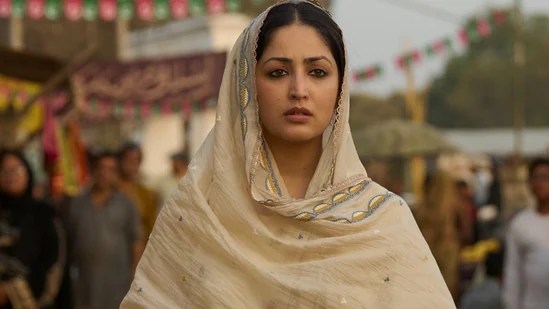
Yami Gautam as Shazia Bano doesn’t just anchor the film; she is the film.
What struck me most was how Shazia’s journey is portrayed not as a dramatic transformation, but as a slow, painful transition. There is no single moment that changes her. Instead, there is the gradual erosion of love, dignity, and security. The ache of sensing distance in a marriage before understanding it. The confusion when affection alternates with neglect. The disbelief and heartbreak when her husband brings home a second wife and calmly expects her to shift from being his wife to his first wife.
Her strength doesn’t arrive overnight or in response to one incident. It accumulates through exhaustion, humiliation, and survival. And that is what makes Yami Gautam’s performance so compelling. Her Shazia is not loud, not performative, not heroic in the conventional sense. She is resilient because she has no choice.
One of the film’s smartest decisions is how little time it spends inside courtrooms. This is not a legal thriller, and it doesn’t pretend to be one. The case itself is open and shut. There is no debate…not constitutionally, not legally, not even religiously about a divorced woman’s right to alimony. A husband who divorces his wife is obligated to provide for her.
So the film understands that the real battle is not inside the courtroom.
It is in the long, hostile path Shazia must walk to reach it.
Outside the court is where her life truly unravels and is rebuilt. Where society ostracizes, taunts, and judges her with far more cruelty than any judge ever could. Where she raises her children amid scarcity, stigma, and isolation. Where she draws strength from her father and pushes forward even when dignity itself feels like a luxury. That is where her story lives and that is where the film is at its strongest.
Where Haq feels slightly imbalanced is in the rest of its narration.
Shazia’s inner world is rendered with clarity and emotional depth, but the people and systems opposing her remain largely opaque. Her husband, in particular, is shown through actions rather than thought. We see him as a loving husband once, a tired man later, someone who remarries without hesitation, refuses alimony, and uses religion and scripture as a shield for every decision he makes. We also see his hurt when his children reject him but without any insight into what he expected after abandoning them emotionally and materially for years.
The problem isn’t that the film doesn’t justify him. It’s that it doesn’t interrogate him.
When the thoughts behind such actions aren’t explored, the cruelty feels oddly hollow. Not because it lacks impact, but because it lacks context. These aren’t random acts by a villain; they are products of belief systems, entitlement, and social sanction. And belief systems are most unsettling when they are fully exposed.
That said, this imbalance does not weaken Shazia’s story. Her arc is complete. Grounded. Devastatingly clear.
In the end, the movie isn’t remembered for the judgment it delivers, but for the life that had to be endured to deserve it.
And in telling that story, Yami Gautam delivers a performance of relentless power.
Haq is not about winning a case. It’s about enduring a life.
-
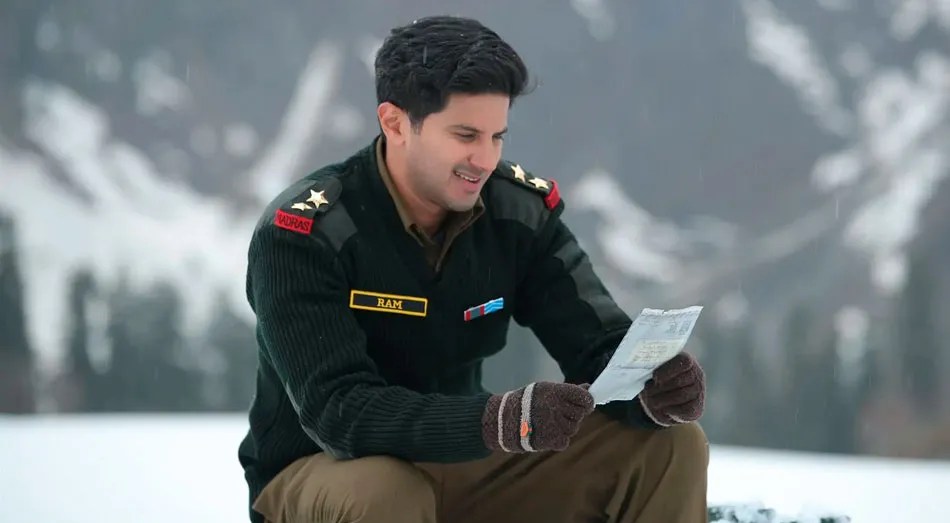
Reflections on Sita Ramam
I avoid tragedies. I always have. I can read anything, watch anything…except stories that end in loss. And yet, Sita Ramam made me sit through its ending not once, not twice, but three times.
The narrative choice itself is audacious. The story of Ram and Sita isn’t handed to us—it’s assembled, fragment by fragment, through memory, testimony, and absence. Afreen’s reluctant journey becomes our entry point. A girl from Pakistan…the granddaughter of Major Abu Tariq…with resentment and anger in her heart comes to India in search of Sita with extreme reluctance. For her, it is a useless chore thrust upon her by her grandfather…one she must complete only if she wants access to his money. And that is to deliver a letter written by Lieutenant Ram to Sita. Afreen along with Balaji, begins her journey to find Sita. Every person they meet gives them a piece of the past.
On paper, this structure should fracture the film. In execution, it does the opposite. Because Ram doesn’t arrive as a flashback. He emerges. Each person Afreen and Balaji meet adds a brushstroke, until suddenly there he is! Fully alive, breathing, smiling, standing quietly in the snow.
Sita Ramam gives us one of the gentlest male protagonists modern Indian cinema has seen. Ram is not written to impress or designed to dominate the frame. He doesn’t perform masculinity…simply inhabits integrity. A man with no family who smiles when he says it. A soldier who looks for ways to avoid bloodshed, not because he fears death but because he values life. A man who answers letters all night, not out of duty, but because being claimed even by strangers fills an ache he didn’t know how to name.
That bemused frown when he reads the first letter from “his wife”? That’s not confusion. That’s wonder. He falls in love without entitlement. He doesn’t know her face. He doesn’t know her status. He doesn’t even know if she’s real. Yet when he finds her, he steps back. Calls her Sita Garu. Holding space instead of hands. Inviting, never pushing.
Any other actor might have tipped Ram into naïveté or sentimentality. But Dulquer Salmaan plays him with grounded grace. This Ram is emotionally adult without being jaded, tender without being fragile. It feels less like watching a man fall in love and more like watching a man learn how to deserve it..
Sita might have fallen for him first. But it was Ram who fell harder.
Sita / Noorjahan. Mrunal Thakur doesn’t just play a princess; she plays a woman standing at the fault line between duty and desire. Her tragedy isn’t privilege. It is a constraint. Every smile she gives Ram carries a question behind it. Every step toward him is also a step away from the life scripted for her. What makes Sita unforgettable isn’t her sacrifice. It’s who she sacrifices for. Towards the end, as she is walking away…shedding the role of a princess, her brother asks her – do you know what you are losing for whom? She replies – you wouldn’t say it if you knew the kind of person I’m doing it for.
She lies to protect him. And maybe a part of her treasured the fact that he loved her as herself. Not her title or privilege. Just her. Sita. The dance teacher who taught a princess. And her attempt to walk away from him was to save him from a future where he would always be less than her title. And when she chooses to become Sita for Ram…it isn’t romantic escapism. It’s a renunciation.
Afreen / Waheeda. She is the skeptic who learns to believe. Her arc is the soul of the framing device. She starts as cynicism incarnate. Raised in inherited anger, taught that identity must always have an enemy.
And then Ram dismantles that worldview without ever meeting her. Her transformation is quiet. Incremental. Earned. From suspicion to disbelief to reluctant admiration to desperate hope. By the time she wants that letter delivered more than she wants closure for herself, by the time she hugs Sita and whispers her question in a tremulous voice – is Ram alive? we understand: Ram didn’t just love Sita. He restored faith. And Rashmika Mandanna plays this shift beautifully—never forcing the emotion, letting the cracks appear naturally.
Sita Ramam does that thing very few love stories dare to attempt and even fewer succeed at. It doesn’t seduce you into love. It envelops you in it. Quietly. Patiently. Almost politely. And before you know it, you’re surrounded…breathing it in, believing in it, aching with it.
What do you even call something like that?
It isn’t romance in the conventional sense. It isn’t longing. It isn’t even tragedy, though tragedy claims it in the end.
It’s devotion. Untainted, unclaimed, unconsummated. Love that exists before touch and survives without it. Not a “be mine.” But “let me be part of your world.” And perhaps that’s why the tragedy doesn’t feel cruel. Because Ram, even in loss, wins.
That’s not just love. That’s dasoham!
-

A reflection on how love negotiates power
How long has it been since I last read a book that sat squarely in the romance genre? I had to think about it — and chuckled when I realised it was sometime in 2022 (or perhaps early 2023). The book was Red, White & Royal Blue.
And now, here I was, closing out 2025 with hockey players.
Was I getting bored with conventional romance tropes, or were my tastes undergoing a quiet 180? I’m not sure. What I do know is that the fact these stories had been adapted into a web series (which I’m yet to watch — and yes, I fully intend to, whenever they hit Indian screens) nudged my curiosity. I won’t pretend otherwise.
I began with Game Changer, not quite knowing what I expected. By the time I hit the 25% mark, it became clear that it had almost nothing in common with RWRB beyond the leads belonging to the same gender. RWRB thrives on big feelings, big gestures, and big politics. It’s charming, glossy, and idealistic — a modern fairy tale unfolding amid press briefings and palace corridors.
Game Changer, in contrast, is private. Domestic. Emotionally unshowy. The romance isn’t trying to impress the reader — it’s simply happening. Shared space. Lingering looks. Comfort sneaking in before either man fully realises what it is. Perhaps that’s why I was already sold so early. The connection felt lived-in rather than staged. Chemistry arose from emotional safety and curiosity rather than conquest. There was softness coexisting with desire.
The sex is hot, yes — but what truly landed was the tenderness. That’s rare, particularly in sports romance, where masculinity often gets overperformed. Game Changer doesn’t climax in one grand arc. Instead, it breathes: ensemble potential through locker-room dynamics, slow emotional progression, and characters who don’t resolve everything in a single confession.
When Scott says, “I’m a closet. I never thought I’d go on a date or have a boyfriend,” it isn’t staged as a dramatic coming-out moment. It feels like a confession of absence. He isn’t naming who he is — he’s naming what he never allowed himself to imagine. For a man who is a champion, a captain, someone physically dominant on the ice, that admission quietly flips the power equation. Success doesn’t protect him. Status doesn’t soften fear. Masculinity doesn’t shield longing.
And then there’s Kip’s flutter of unease when Scott offers to buy him a tuxedo.
That moment isn’t about greed. Or embarrassment. It’s about imbalance. When two men date, there’s no culturally assigned “provider” role. No default script for who gives and who receives. No social cushioning for insecurity. Every gesture carries weight. Is this generosity — or power? Am I being cared for — or diminished? One person’s hope begins to feel small beside another’s certainty. The imbalance here isn’t of love; it’s of risk. And that risk keeps shifting hands.
Straight romances come padded with centuries of expectation. This one doesn’t. Here, desire, visibility, and worth are being negotiated simultaneously — by both people. Perhaps that’s why it felt rawer. By comparison, many boy-girl dynamics begin to feel almost… rehearsed.
That said, four hundred pages is a long stretch for a romance — and there were more than a few eye-rolls courtesy of the epidemic of shy glances and blushing pink cheeks. I’m used to scanning for the next hurdle, the next turn, the next payoff. Instead, Game Changer offered comfort, doubt, reassurance — and repeat. Very realistic. Very uncinematic. I had to adjust how I read it: stop hunting for “what’s next,” treat it as emotional ambience, let scenes wash rather than pull — and ignore the blushing.
Then came Heated Rivalry.
Or, as I mentally renamed it: What if the blushing stopped and the teeth came out?Ilya Rozanov isn’t written to be likeable at first. He’s meant to be intrusive. His bravado isn’t random; it’s directed. Personal. And that’s precisely why Shane can’t disengage. Annoyance alone doesn’t do that. Recognition does. Their early orbiting isn’t just about attraction — it’s about the impossibility of dismissing the other as irrelevant. That is the real spark.
The foreplay between two fiercely competitive men falls firmly into the unhinged in the best possible way category. Ridiculous fun. Not candles. Not longing glances. But: “He did it better than me.” “Oh yeah? I’ll fix that.” “How many times?” “Fine. I’ll outdo him.” Desire becomes a challenge. Intimacy turns into a contest. Insecurity fuels motivation. They aren’t trying to impress a lover — they’re trying to win.
Absurd. Juvenile. Comic. Endearing. Hot.
Like watching two Olympic athletes turn intimacy into a scoreboard.This doesn’t read like romance. It reads like identity collision — with attraction leaking out under pressure. Rivalry isn’t a trope here; it’s a structural constraint. The book doesn’t balance rivalry and romance. It refuses to separate them. These aren’t two men falling in love despite rivalry. They fall in love through it. Which is one of the hardest dynamics to write — and one of the most satisfying to read when done right.
As the story progresses, particularly past the halfway mark, Ilya’s layers begin to surface. His ego reveals itself as armour. Arrogance masks fear of rejection. Restraint masquerades as indifference. But as these layers peel away, Shane begins to slide into a role that feels uncomfortably familiar — the emotional axis, around which Ilya adjusts himself. A male version of a female lead. That shift didn’t entirely sit right with me. Since their story continues in another book, I’ll reserve a deeper critique until I read it.
Taken together, these two very different love stories share something quietly radical. Longing exists without entitlement. Hesitation is rooted in fear, not ego. Consent is central, not decorative. Vulnerability is erotic. In a culture where male desire is so often portrayed as something that must conquer, this tenderness-as-strength feels like a meaningful departure.
And perhaps that’s what stayed with me after I closed the books.
-
How Agneepath Changed the Way We Understand — and Excuse — Anger
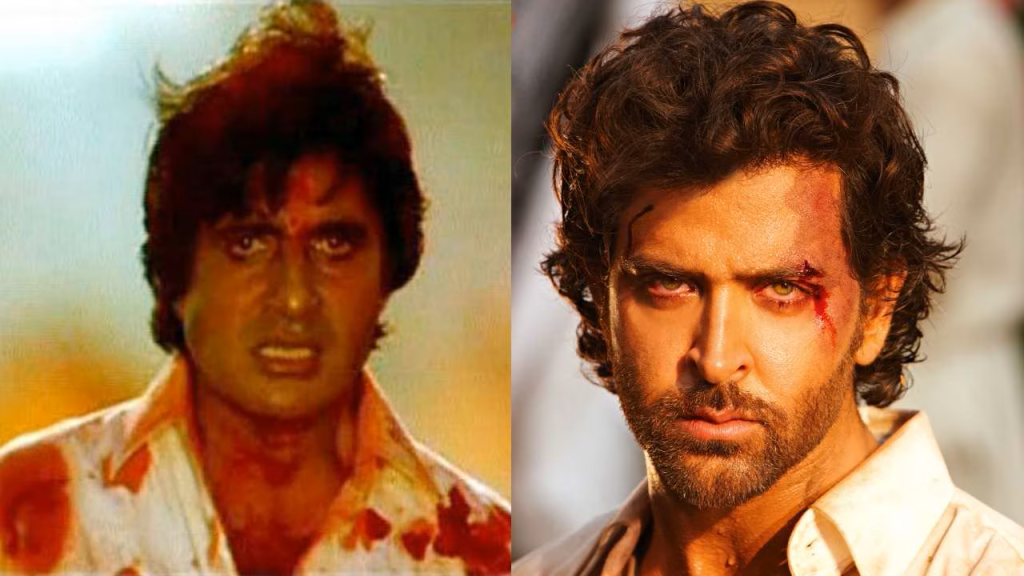
There was a time when anger in Hindi cinema was meant to unsettle us. It wasn’t aspirational. It wasn’t stylish. It sat heavy in the chest, made heroes uncomfortable, and left audiences unsure of whom to root for. When Agneepath released in 1990, it was rejected not because it lacked power, but because it held up a mirror no one wanted to look into. Twenty-two years later, the same story returned to thunderous applause — louder, slicker, more righteous. Somewhere between these two films, rage stopped being corrosive and started being consumable. This is not a comparison of two versions of Agneepath. It is a reflection on what we began to celebrate — and what we quietly stopped fearing.What made Agneepath (1990) so deeply unsettling wasn’t just its darkness, but the nature of Vijay Deenanath Chauhan’s anger. Until then, Hindi cinema was comfortable with reactive rage — the ordinary man pushed too far by injustice, cruelty, or loss, who lashes out because he has no other choice. That anger, however violent, was still framed as a response. Vijay’s wasn’t. His fury was proactive — cultivated, planned, and carried forward with intent from childhood. His father’s death didn’t break him; it forged him. He didn’t search for justification, nor did he wrestle with guilt. Those responsible would pay, and he would choose whatever path was required to make that happen. For an audience used to heroes who stumbled into violence reluctantly, this kind of clarity was disturbing. More so because Vijay wore it with pride — a quiet swagger that didn’t ask permission, didn’t seek absolution, and didn’t apologise for the destruction he was orchestrating. In the 1990s, a hero could be angry. He could even be violent. But he could not be morally grey by design — and certainly not proud of it.
And then there was the mother. In the cinema of the ’80s and ’90s, moral legitimacy flowed through her approval. A hero could rage, kill, even destroy — but only if his mother stood behind him, blessing his anger or forgiving it. Mere paas maa hai wasn’t just a dialogue; it was a moral certificate. Vijay Deenanath Chauhan had none. He rarely came home. He didn’t seek reassurance. He didn’t lower his eyes in guilt. He absorbed his mother’s disapproval without flinching — her rejection, her disowning, her refusal to understand him — and chose his path anyway. There were no apologies, no pleading, no emotional bargaining. In an era where a hero’s righteousness was validated by maternal sanction, Vijay’s refusal to seek it was quietly radical. He didn’t need to be forgiven to proceed. And that, perhaps more than his violence, made him impossible to love.
The 2012 Agneepath tells the same story, but it inhabits a very different emotional landscape. Gone are the mythic overtones and classical richness; this Vijay emerges from the grime of Mandwa and the underbelly of Mumbai — spaces that feel bruised, exposed, and perpetually unsafe. He, too, makes no apologies. He plans his revenge with the same clarity, walks the same irreversible path, and carries no regret for the destruction he intends to unleash. But where Amitabh Bachchan’s Vijay was sealed off by certainty, Hrithik Roshan’s carries visible fracture lines. There is horror in his eyes — bone-deep, unrelenting — and a grief that never settles. His screams are not just fury; they drip with agony and loss in equal measure.
What fundamentally shifts is his emotional gravity. This Vijay yearns — for connection, for his mother’s acceptance, for a semblance of family he can hold onto. Her rejection wounds him in ways that feel visceral, as though something inside him twists and tears, yet it never diverts him from his chosen course. His mother chooses distance and safety, disappearing from the violence that shattered her life. Vijay cannot. His love for his sister, those rare, almost startled smiles when he is with Kaali, reveal what still anchors him to humanity even as he descends further into violence. Revenge here is fuelled not just by rage, but by unresolved trauma — the loss of a father he idolised, witnessed in its most brutal, scarring form.
If Bachchan’s Vijay commanded the screen through controlled menace, swagger, and moral certainty, Hrithik’s claimed it through raw emotional exposure. Neither performance holds back. Both force the audience to sit with discomfort and a lack of closure. Yet Hrithik’s Vijay was embraced more readily — perhaps because by 2012, audiences had learned to recognise rage when it comes wrapped in pain. We had become more willing to empathise with a hero who bleeds, even as he destroys.
This is where the line begins to blur. Empathy, in itself, is not the problem. Understanding a hero who bleeds even as he destroys is a sign of emotional maturity — an audience learning to read pain beneath rage. But somewhere along the way, empathy slid into identification. Pain became permission. Inner anguish began to excuse boundary-crossing, cruelty, and the absence of consequences. The same emotional grammar that helped us understand Hrithik Roshan’s Vijay quietly trained us to defend men like Arjun Reddy, Kabir Singh, and Ranvijay Singh — not as cautionary figures, but as romanticised expressions of wounded masculinity. Rage, once unsettling, is now framed as authenticity. Destruction, once tragic, is recast as devotion. The danger isn’t that cinema shows us broken men. It’s that it increasingly asks us to root for them without asking what they break along the way — or why they’re never made to pay for it.
Or…perhaps the real shift isn’t in how cinema portrays rage, but in how easily we now forgive it — provided it arrives packaged as pain.
-

The Wizard of Words — and the Trouble with Too Much Magic
Trivikram Srinivas is a filmmaker who prefers words over weapons.
In his world, dialogues don’t merely support a scene — they define it. They either land softly, like lived wisdom, or strike hard, like a punch delivered with precision. His philosophy of life is never hidden; it stares back at us through his lines.
“Tegipoyetappude daaram balam telustundi… Vellipoyetappude bandham viluva telustundi.”
“Manam baagunnappudu lekkalu maatladi, baalenappudu vilvalu maatladakoodadu, sir.”These aren’t just dialogues. They are Trivikram’s moral coordinates.
For a long time, he didn’t just score boundaries — he hit sixers in almost every film. And not with gimmicks. With writing. With rhythm. With an instinctive understanding of how language works when placed in the right mouth, at the right moment.
His humour, especially, belongs to a rare breed. The kind that refuses to age. The kind that makes us laugh even after hearing the same line for the fiftieth time. Because the humour isn’t in the joke — it’s in the delivery.
Take “Vaadu magaadu ra bujji.”
On paper, it’s ordinary. Almost throwaway. But when Tanikella Bharani delivers it in Athadu — with that pause, that authority, that understated pride — it becomes immortal. Two decades later, it still lives on in memes. That’s not accidental writing. That’s command over performance.
Story-wise, Trivikram’s films often revolve around families. If Rajamouli places the mother–son bond at the emotional core of his narratives, Trivikram consistently excels at father–son and father–daughter relationships. And he does it without melodrama.
The Prakash Raj–Shreya equation in Nuvve Nuvve.
Nassar–Mahesh Babu in Athadu.
Prakash Raj–Allu Arjun in Son of Satyamurthy.The love here isn’t loud. It’s steady. Restrained. Confident.
A hand that hovers before blessing a head.
A glance that lingers just a second longer than necessary.
A camera that pans a room instead of announcing emotion through dialogue.He understands paternal affection deeply — how men love without always saying it.
And yet, that sensitivity falters when the emotional centre shifts toward motherhood and women.
This is where Trivikram’s cinema begins to feel… off. Not wrong in an obvious way. Not aggressively problematic. But like a grain of sand stuck between the teeth — small, persistent, impossible to ignore once noticed.
Films like Agnatavaasi, Ala Vaikunta Puramuloo, and Guntur Kaaram expose this imbalance more clearly. Trivikram seems far more comfortable navigating patriarchy than interrogating it. There is nothing inherently wrong with that. But the lack of balance shows.
Women in his films often speak ideology instead of breathing emotion. They are written as positions, not people. Strength, when given to them, comes wrapped in explanation — rarely in quiet contradiction. Men, on the other hand, get the best lines irrespective of whom they’re speaking to. Father, son, friend, rival — their dialogues carry authority, wit, and moral weight.
This disparity often slips by unnoticed because the stories are engaging and the dialogues feel like life lessons. Unless one is actively looking for it, the imbalance remains under the surface.
But sometimes, it surfaces sharply.
That infamous dialogue in AVP — “Aadaallu vere inti nunchi vachhina vaadini bharta ga oppukuntaaru kaani, tana ninchi raani vaadini bidda ga oppukoru.”
With that single line, the entire concept of adoption is dismissed. Not questioned. Not challenged. Declared.
Which is jarring — because mythology, history, and lived reality repeatedly contradict it. Kaikeyi and Rama. Yashoda and Krishna. Kunti and Nakul–Sahadev. Draupadi and Abhimanyu.This wasn’t a character’s flawed belief. It felt like an authorial assertion. And that’s why it grated.
To be fair, Trivikram does try to change it. A Aa. Agnatavaasi. ASVR. Guntur Kaaram. The intent is visible. The execution isn’t.
From A Aa onward, something began slipping. Perhaps it was because the story was adapted from the Telugu novel Meena. Perhaps creative indulgence crept in. Perhaps star pressures diluted restraint. Whatever the reason, the balance between subtext and sermon began to tilt.
Then came Agnatavaasi — a film even the most loyal fan base struggled to defend.
There is, however, one film that sits uncomfortably at the centre of this decline — Aravinda Sametha Veera Raghava.
A film that raises a fundamental question: why is “Aravinda” even in the title?
Despite being named after her, Aravinda has no real narrative agency. She doesn’t influence the conflict, alter the protagonist’s worldview in any meaningful way, or anchor the emotional arc. The story belongs entirely to Raghava — and even that ownership comes with a caveat.
Gone was Trivikram’s trademark humour. Gone were the conversational sparks that once balanced philosophy with playfulness. What remained was a heavy, sermon-driven narrative where Raghava came across less as a conflicted man evolving through experience and more like a preacher holding an axe.
Aravinda, who could have been the emotional counterweight, instead feels like a narrative device — a mouthpiece for ideals rather than a lived-in character. If the intention was to present a strong, grounding woman, it never fully translates on screen. What emerges instead is a character that feels immature, preachy, and strangely detached from the consequences unfolding around her.
It feels as though Trivikram wanted to give Aravinda weight — perhaps even intended her to be the moral anchor — but couldn’t reconcile that intent with the film’s aggressively male-centric arc. The result is a title that promises balance, and a story that never delivers it.
In hindsight, ASVR marks a critical shift. It is the film where Trivikram’s words stop conversing and start declaring. Where ideology overtakes intimacy. Where the silence that once carried meaning is replaced by speeches meant to convince.
And finally, Guntur Kaaram.
That film felt so disconnected from Trivikram’s voice that it raised an uncomfortable question — was Guruji really the one who made it? The dialogues were flat. The emotional spine was missing. The relationships lacked nuance. Apart from Mahesh Babu — who, in many of his films now, becomes the karta, karma, and kriya — there was very little to hold on to.
For the first time, it became easy to actively avoid a Trivikram film after the initial watch.
And yet, despite all of this, it’s difficult to write him off completely.
Because once upon a time, he showed us how powerful restraint could be.
How silence could speak.
How words, when used sparingly, could wound or heal.One can only hope that Guruji finds his way back to that balance — trusting subtext again, allowing women to exist beyond ideology, and remembering that sometimes, the strongest dialogue is the one left unsaid.
 The Storyteller's Lens