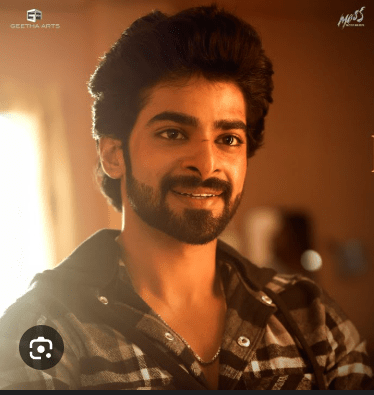
When the sweetest man becomes the quietest danger.
It’s strange that The Girlfriend disturbed me far more than Dhurandhar.
There was nothing explicitly violent in it — no gore, no bad language, no politics framing terror.
Yet it unsettled me on a deeper level.
It was well-made. Thoughtfully crafted. And perhaps that’s why I felt it so acutely.
Because The Girlfriend doesn’t frighten you loudly — it frightens you quietly.
It shows you a girl slowly sinking, slowly disappearing, and the worst part is… she doesn’t even realise she’s disappearing. She’s happy while she fades.
That is the real horror.
Bhooma — The Girl Who Slipped Away From Herself
In the beginning, I saw her spark — the same spark Durga sees.
A small-town girl with big dreams, pursuing her MA in Literature to build a future she envisioned for herself.
But then we see her father. And suddenly everything clicks.
Bhooma’s slide into becoming “the girlfriend” feels natural to her because she has lived this dynamic all her life.
Her father decides → she follows.
Her father talks → she listens.
Her father wants → she sacrifices.
So when Vikram begins to dictate her routines, her time, her dreams, her availability — she doesn’t pause to question it.
This is the love she has been taught. This is the affection she recognizes. This is the language she grew up speaking.
There are no villains in her world. Only men who “know what is best for her.”
And women like her learn to disappear so quietly, even they don’t notice the vanishing.
When Awareness Creeps In
Her conversations with Durga, and later with Vikram’s mother, plant the first seeds of awareness. Not rebellion — just discomfort. A soft, persistent ache that tells her something is wrong.
Then comes the scene between her father and her professor — and it lands like a silent punch.
Vikram isn’t new. He’s a replica. The same emotional blackmail. The same guilt manipulation. The same entitlement phrased as love.
Her father says, “I took care of you for 22 years, I made you my world, and this is how you repay me?”
Vikram echoes the same sentiments — different tone, same cage.
No wonder she never saw the red flags. They were her normal.
The Perfect Introduction of Vikram
From the very beginning, Vikram is introduced as the kind of man girls are trained to find “safe.”
A boy who laughs off ragging. A boy who jumps in to protect girls walking home at night. A boy who looks at Bhooma with soft admiration and says, “You’re just like my mom.”
On the surface, he’s the dream — confident, kind, courageous, affectionate. But beneath each of these lies a pattern: a boy who loves attention, a boy who sees himself as a saviour, and a boy whose definition of affection is rooted in the submissiveness he witnessed at home.
None of this looks dangerous at first. But it is the quiet beginning of a very loud kind of control.
Vikram — A Disturbing Study in “Sweet” Control
Dheekshit Shetty deserves immense credit.
For a newcomer to take on a role like Vikram — a khichdi of insecurity, entitlement, neediness, ego, affection, and delusion — takes courage.
What’s chilling about Vikram is…He doesn’t think he’s wrong. Not once. Not ever.
One moment he scolds Bhooma’s father for dragging her away from her dreams. “What kind of father are you? She’s begging you for a month to finish her course.” And in the next breath, he tells her to drop the same course because his need for marriage matters more.
Two contradictory stances. One man who sees no contradiction.
What truly chilled me was the “belt story.”
He narrates how his father used to beat his mother when angry — and he laughs. Then reassures Bhooma – “Don’t worry. I won’t hit you, no matter how angry you make me.”
My reaction matched Bhooma’s — a silent, stunned WTF.
Vikram thinks he’s progressive because he won’t raise his hand. But he is blind to the far more subtle violence he inflicts:
- guilt
- coercion
- possessiveness
- entitlement
- emotional blackmail
- erasure of her identity
To the outside world, he’s the sweet guy madly in love. Only a few can see the ego and entitlement simmering beneath.
Rashmika — A Career-Best Performance
Rashmika carries Bhooma with extraordinary sensitivity. Her innocence, confusion, joy, hesitation, pain — all appear on her face before she speaks.
You don’t watch her perform. You feel her.
This role required vulnerability without weakness, and she delivered.
In The End…
Are there girls like Bhooma? Yes. Unfortunately, yes.
Are there boys like Vikram? More than we’d like to admit.
Is the percentage going down? I hope so. Truly.
Because the most dangerous form of control isn’t loud. It doesn’t scream or slap. It simply convinces you that disappearing is what love looks like.
And that is why The Girlfriend left me disturbed long after the credits rolled.


Leave a comment