A life lived beyond the verdict
Haq isn’t about a verdict or a judgment. It’s about the cost of survival, and the woman who carried it.
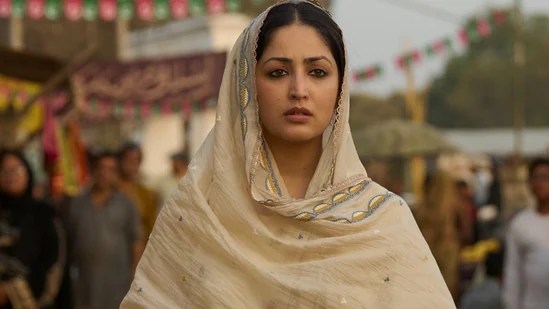
Yami Gautam as Shazia Bano doesn’t just anchor the film; she is the film.
What struck me most was how Shazia’s journey is portrayed not as a dramatic transformation, but as a slow, painful transition. There is no single moment that changes her. Instead, there is the gradual erosion of love, dignity, and security. The ache of sensing distance in a marriage before understanding it. The confusion when affection alternates with neglect. The disbelief and heartbreak when her husband brings home a second wife and calmly expects her to shift from being his wife to his first wife.
Her strength doesn’t arrive overnight or in response to one incident. It accumulates through exhaustion, humiliation, and survival. And that is what makes Yami Gautam’s performance so compelling. Her Shazia is not loud, not performative, not heroic in the conventional sense. She is resilient because she has no choice.
One of the film’s smartest decisions is how little time it spends inside courtrooms. This is not a legal thriller, and it doesn’t pretend to be one. The case itself is open and shut. There is no debate…not constitutionally, not legally, not even religiously about a divorced woman’s right to alimony. A husband who divorces his wife is obligated to provide for her.
So the film understands that the real battle is not inside the courtroom.
It is in the long, hostile path Shazia must walk to reach it.
Outside the court is where her life truly unravels and is rebuilt. Where society ostracizes, taunts, and judges her with far more cruelty than any judge ever could. Where she raises her children amid scarcity, stigma, and isolation. Where she draws strength from her father and pushes forward even when dignity itself feels like a luxury. That is where her story lives and that is where the film is at its strongest.
Where Haq feels slightly imbalanced is in the rest of its narration.
Shazia’s inner world is rendered with clarity and emotional depth, but the people and systems opposing her remain largely opaque. Her husband, in particular, is shown through actions rather than thought. We see him as a loving husband once, a tired man later, someone who remarries without hesitation, refuses alimony, and uses religion and scripture as a shield for every decision he makes. We also see his hurt when his children reject him but without any insight into what he expected after abandoning them emotionally and materially for years.
The problem isn’t that the film doesn’t justify him. It’s that it doesn’t interrogate him.
When the thoughts behind such actions aren’t explored, the cruelty feels oddly hollow. Not because it lacks impact, but because it lacks context. These aren’t random acts by a villain; they are products of belief systems, entitlement, and social sanction. And belief systems are most unsettling when they are fully exposed.
That said, this imbalance does not weaken Shazia’s story. Her arc is complete. Grounded. Devastatingly clear.
In the end, the movie isn’t remembered for the judgment it delivers, but for the life that had to be endured to deserve it.
And in telling that story, Yami Gautam delivers a performance of relentless power.
Haq is not about winning a case. It’s about enduring a life.
 The Storyteller's Lens
Leave a comment