How Agneepath Changed the Way We Understand — and Excuse — Anger
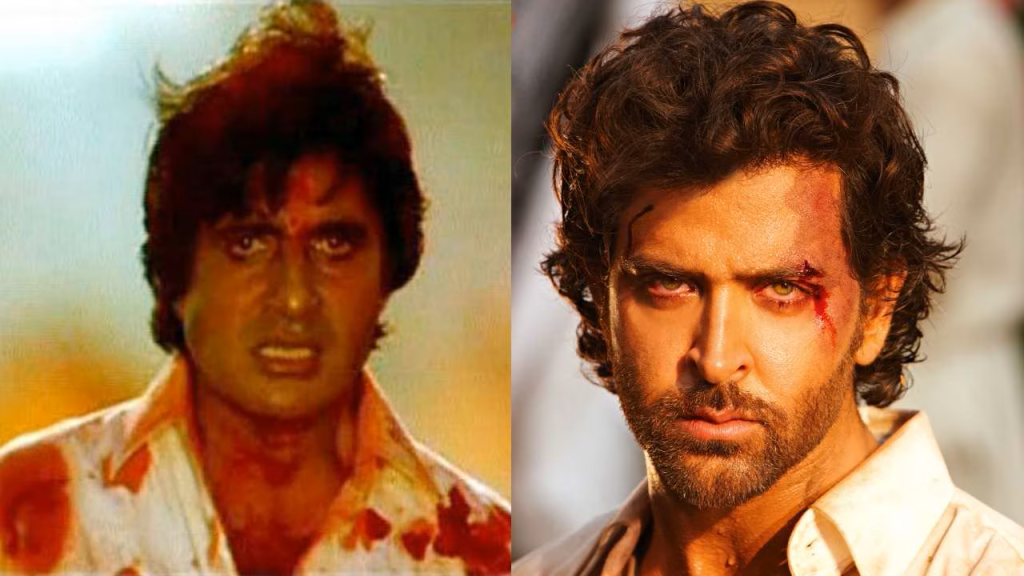
There was a time when anger in Hindi cinema was meant to unsettle us. It wasn’t aspirational. It wasn’t stylish. It sat heavy in the chest, made heroes uncomfortable, and left audiences unsure of whom to root for. When Agneepath released in 1990, it was rejected not because it lacked power, but because it held up a mirror no one wanted to look into. Twenty-two years later, the same story returned to thunderous applause — louder, slicker, more righteous. Somewhere between these two films, rage stopped being corrosive and started being consumable. This is not a comparison of two versions of Agneepath. It is a reflection on what we began to celebrate — and what we quietly stopped fearing.What made Agneepath (1990) so deeply unsettling wasn’t just its darkness, but the nature of Vijay Deenanath Chauhan’s anger. Until then, Hindi cinema was comfortable with reactive rage — the ordinary man pushed too far by injustice, cruelty, or loss, who lashes out because he has no other choice. That anger, however violent, was still framed as a response. Vijay’s wasn’t. His fury was proactive — cultivated, planned, and carried forward with intent from childhood. His father’s death didn’t break him; it forged him. He didn’t search for justification, nor did he wrestle with guilt. Those responsible would pay, and he would choose whatever path was required to make that happen. For an audience used to heroes who stumbled into violence reluctantly, this kind of clarity was disturbing. More so because Vijay wore it with pride — a quiet swagger that didn’t ask permission, didn’t seek absolution, and didn’t apologise for the destruction he was orchestrating. In the 1990s, a hero could be angry. He could even be violent. But he could not be morally grey by design — and certainly not proud of it.
And then there was the mother. In the cinema of the ’80s and ’90s, moral legitimacy flowed through her approval. A hero could rage, kill, even destroy — but only if his mother stood behind him, blessing his anger or forgiving it. Mere paas maa hai wasn’t just a dialogue; it was a moral certificate. Vijay Deenanath Chauhan had none. He rarely came home. He didn’t seek reassurance. He didn’t lower his eyes in guilt. He absorbed his mother’s disapproval without flinching — her rejection, her disowning, her refusal to understand him — and chose his path anyway. There were no apologies, no pleading, no emotional bargaining. In an era where a hero’s righteousness was validated by maternal sanction, Vijay’s refusal to seek it was quietly radical. He didn’t need to be forgiven to proceed. And that, perhaps more than his violence, made him impossible to love.
The 2012 Agneepath tells the same story, but it inhabits a very different emotional landscape. Gone are the mythic overtones and classical richness; this Vijay emerges from the grime of Mandwa and the underbelly of Mumbai — spaces that feel bruised, exposed, and perpetually unsafe. He, too, makes no apologies. He plans his revenge with the same clarity, walks the same irreversible path, and carries no regret for the destruction he intends to unleash. But where Amitabh Bachchan’s Vijay was sealed off by certainty, Hrithik Roshan’s carries visible fracture lines. There is horror in his eyes — bone-deep, unrelenting — and a grief that never settles. His screams are not just fury; they drip with agony and loss in equal measure.
What fundamentally shifts is his emotional gravity. This Vijay yearns — for connection, for his mother’s acceptance, for a semblance of family he can hold onto. Her rejection wounds him in ways that feel visceral, as though something inside him twists and tears, yet it never diverts him from his chosen course. His mother chooses distance and safety, disappearing from the violence that shattered her life. Vijay cannot. His love for his sister, those rare, almost startled smiles when he is with Kaali, reveal what still anchors him to humanity even as he descends further into violence. Revenge here is fuelled not just by rage, but by unresolved trauma — the loss of a father he idolised, witnessed in its most brutal, scarring form.
If Bachchan’s Vijay commanded the screen through controlled menace, swagger, and moral certainty, Hrithik’s claimed it through raw emotional exposure. Neither performance holds back. Both force the audience to sit with discomfort and a lack of closure. Yet Hrithik’s Vijay was embraced more readily — perhaps because by 2012, audiences had learned to recognise rage when it comes wrapped in pain. We had become more willing to empathise with a hero who bleeds, even as he destroys.
This is where the line begins to blur. Empathy, in itself, is not the problem. Understanding a hero who bleeds even as he destroys is a sign of emotional maturity — an audience learning to read pain beneath rage. But somewhere along the way, empathy slid into identification. Pain became permission. Inner anguish began to excuse boundary-crossing, cruelty, and the absence of consequences. The same emotional grammar that helped us understand Hrithik Roshan’s Vijay quietly trained us to defend men like Arjun Reddy, Kabir Singh, and Ranvijay Singh — not as cautionary figures, but as romanticised expressions of wounded masculinity. Rage, once unsettling, is now framed as authenticity. Destruction, once tragic, is recast as devotion. The danger isn’t that cinema shows us broken men. It’s that it increasingly asks us to root for them without asking what they break along the way — or why they’re never made to pay for it.
Or…perhaps the real shift isn’t in how cinema portrays rage, but in how easily we now forgive it — provided it arrives packaged as pain.
The Storyteller's Lens
For the scenes that linger and the words that echo
 The Storyteller's Lens
Leave a comment