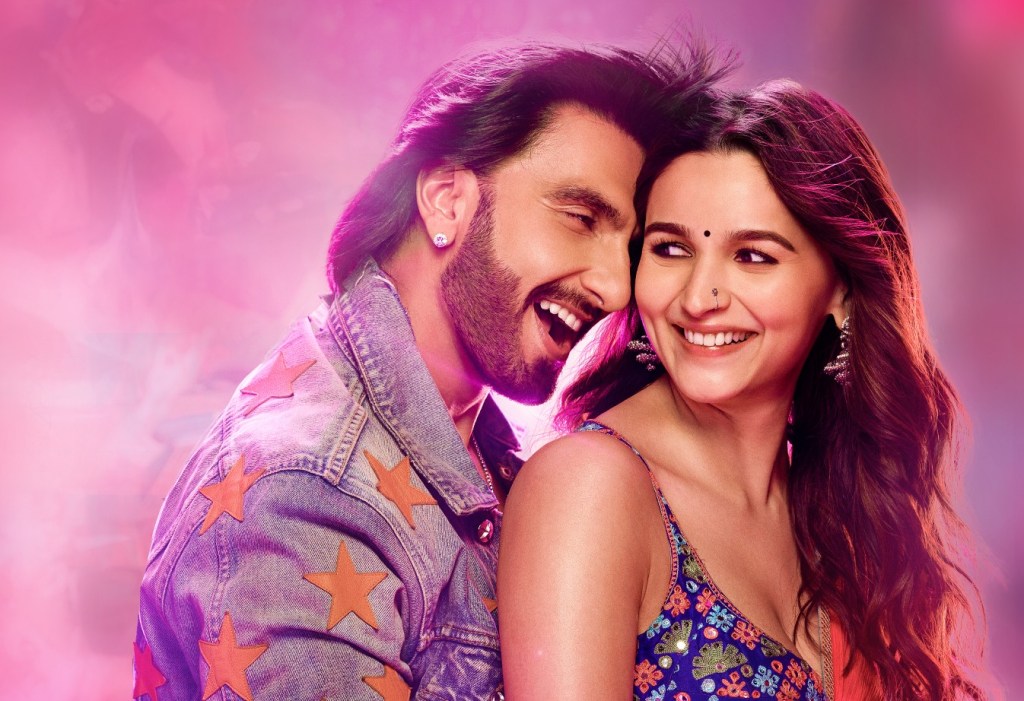
It took 25 years, a blue bra, and Ranveer Singh’s English — but he finally got there.
In 1998, Kuch Kuch Hota Hai released to screaming crowds and all-time blockbuster labels. Everyone loved it — except me. I walked out of the theatre midway (a first for me, and I’ve sat through some truly questionable cinema). Something about it made me bristle like a porcupine rubbed the wrong way. The syrupy moral binaries, the forced “values,” the way love suddenly arrived wrapped in a chiffon saree — no, thank you. I decided then that I wasn’t spending another paisa watching Karan Johar’s films in a theatre.
But curiosity is a stubborn thing. So when his later films came on TV — Kabhi Khushi Kabhie Gham, Kal Ho Naa Ho, Kabhi Alvida Naa Kehna, My Name Is Khan, Student of the Year — I watched them all. And what struck me, over time, was not the gloss or grandeur (that was a given) but the gradual shift in his storytelling. Karan Johar was changing — slowly, deliberately, one film at a time.
The Evolution of Love: From Worship to Work
Johar’s directorial arc has always revolved around love — one-sided love, tragic love, friendship-turned-love, forbidden love, even extra-marital love (KANK deserves its own essay for the sheer audacity of that happy ending). But what fascinates me is how he’s gone from defining love as a spectacle to portraying it as an effort — from something you fall into to something you build together.
When he made Rocky Aur Rani Ki Prem Kahani, it felt like he’d finally exhaled. Like he was done trying to put his leads into pre-moulded archetypes. The film felt like a quiet rebellion against the Karan Johar of 1998.
From Anjali and Tina to Rani and Gayatri
KKHH gave us Anjali and Tina. Rocky Rani gives us Rani and Gayatri. The contrasts are delicious.
- Anjali believed love happens only once. Rani laughs at that idea — “It’s just a fling, just a thing,” she says, until her heart refuses to play along.
- Anjali called love a compromise. Rani says, “We love each other, so we adjust, we compromise — that’s what love is.”
- Tina sang a bhajan to prove she had sanskaar. Gayatri, overweight and anxious, sings Gupchup Gupchup — an item number — to assert her right to exist as she is. Terrified inside, defiant outside.
Even the side arcs matured. KKHH used Miss Braganza’s comic flirtations for laughs; RRPK used the grandparents’ incomplete love for gravity and grace — the kind that carries generational echoes. The film’s use of Abhi Na Jao Chhod Kar makes that love story quietly unforgettable — not nostalgic, but healing.
The Gaze Has Shifted — And So Has the Wardrobe
In KKHH, Rahul noticed Anjali only after her “transformation”: the sari, the straight hair, the breeze doing its filmi duty. His love arrived when she looked the part.
In RRPK, Rani Mukerji’s chiffon saris — the very trope I once despised — return, but they’re reframed. Rani’s sensuality is hers, not a costume for approval. More importantly, Rocky — a man from a deeply traditional Punjabi family where women wear loose salwars and pull ghoonghats over their heads — never once imagines Rani in “modest” attire. The thought doesn’t even cross his mind.
He loves her exactly as she is — bold, sharp-tongued, luminous — and she loves him in return, not despite his bad English but because of his soft heart and unfiltered honesty. His lines might make you cringe — but that’s precisely the point. His emotional fluency transcends language.
The Duet Reversed
Even the love song plays differently now. In Tum Kya Mile, the usual gender roles are flipped.
It isn’t the hero brooding over lost love; it’s the heroine — the tough, practical, self-contained Rani — who finds herself blindsided by emotion. She’s the one imagining him everywhere while trying to focus on work.
For a director who once romanticized male yearning and female transformation, this reversal feels poetic.
When the Roles Reverse
There’s another subtle revolution in RRPK: the emotional flip of gender archetypes.
Rani is the practical, brash, short-tempered one. Rocky is the emotional, romantic, soft-hearted soul. Together, they stumble, argue, and struggle to find middle ground — and we see that struggle. Love isn’t a montage anymore; it’s a negotiation.
A Full-Circle Moment
And what do you know? The movie is a hit. One of the year’s highest grossers. But for me, it’s more than box office validation — it’s narrative redemption.
The filmmaker who once made a heroine change herself to earn love now gives us women who change nothing and still get it. The man who once made “pallu equals love” now says “bad English equals charm.”
So yes, Karan Johar — take this pat on the back. I have officially, completely forgiven you for Kuch Kuch Hota Hai.
Go ahead and give us more Ranis and Gayatris.
I’ll watch them all — this time, in the theatre.
 The Storyteller's Lens
Leave a comment