Where silence speaks, the camera thinks, and the craft outruns the cliche.
Another movie that made me pause. Not because the story was unique or the dialogues were out of this world. But because it changed something fundamental — the way a story is told.
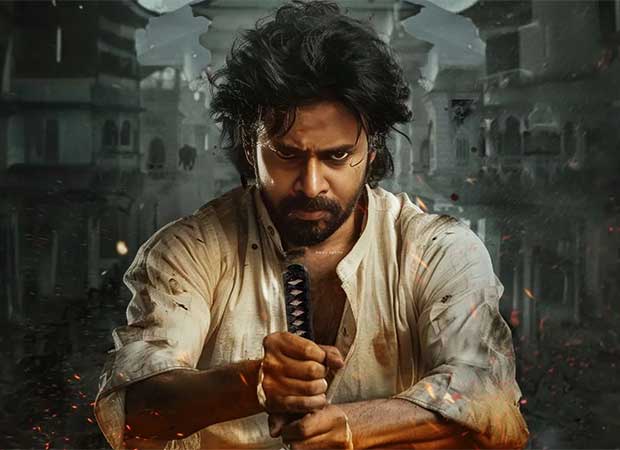
At the heart of it, OG is a regular Telugu masala movie. The kind we’ve seen a hundred times over. The hero is your classic mass archetype — a silent storm in leather boots, wielding a Samurai sword this time (we’ve clearly upgraded from the axe/hammer/machine-gun inventory), slicing heads like they’re overripe watermelons and papayas.
The background score knows exactly when to rise.
The camera knows exactly when to slow-mo.
And yet… something feels different.
Because this time, the craft outruns the cliché.
The family setup? Predictable.
Grumpy-sunshine equation, daughter added for emotional stakes.
The backstory? Textbook.
Loner, birth parents dead, finds father figure in Satya Dada, dedicates life to protecting the man and his empire.
The villain? Omi — Omkar Vardhaman Mirajkar — a name that sounds like a thesis on chaos. His geography makes zero sense. The man travels from Mumbai port to Nashik, kills a few people, and gets back to the port before Satya Dada (who is still in Nashik) finishes one phone call.
But compared to Ram Charan’s Vinaya Vidheya Rama, where the man jumps from a Gujarat airport to Bihar to some Himalayan horse track in one exhale — this one actually makes you think,
“Yes, yes. Possible. Totally doable.”
Because the difference lies not in what is told, but how it’s told.
No loud dialogues.
No cringe punchlines pretending to be machismo.
No disco-ball costumes masquerading as style.
Even the cars, the houses, the streets — they breathe Bombay of the 80s and 90s.
The production design feels lived-in, not dressed-up.
The cinematography doesn’t worship the hero; it observes him.
A refreshing shift.
What struck me most was the narrative rhythm.
The film moves between past and present — and sometimes a different past before swinging back to a different present — all seamlessly.
There’s no spoon-feeding. No explanatory dialogues. No “Do you know who he is?” nonsense.
You understand who OG is through visual language —
through stillness, silence, and what the camera chooses to reveal.
Pawan Kalyan says very little throughout.
His stillness is storytelling.
His silence carries weight.
When he does speak, it’s stripped of Instagram-reel theatrics.
And then there’s Arjun’s voiceover.
That voice.
That gravel.
That command.
“When cyclone strikes, you bow to the tide. When OG comes, you run and hide.”
Poetic. Menacing. Dignified.
I only wish he’d delivered the entire line instead of splitting it with Prakash Raj.
Still, it lingers.
OG is proof of how far a familiar story can go when you respect screenplay, narration, and editing as much as you worship your star.
Sujeeth clearly had a vision in Saaho: a sprawling world, slick tone, ambition.
The problem was the execution.
It felt like a concept trapped inside a spectacle.
But with OG, he gets it right.
The restraint.
The world-building.
The atmosphere.
The tone.
Every frame feels like part of a larger cinematic universe — one that doesn’t rely on punchlines or VFX fireworks, but on mood and menace.
And that’s where Sujeeth wins.
Because when you can take a story this familiar and make it feel fresh… when you can make your audience care even when they already know what’s coming… that is the hallmark of a director with vision.
Now that OG and Saaho officially exist in the same universe, I can’t wait to see what he’s building next.
Because if this is the prologue…the storm hasn’t even begun.
 The Storyteller's Lens
Leave a comment